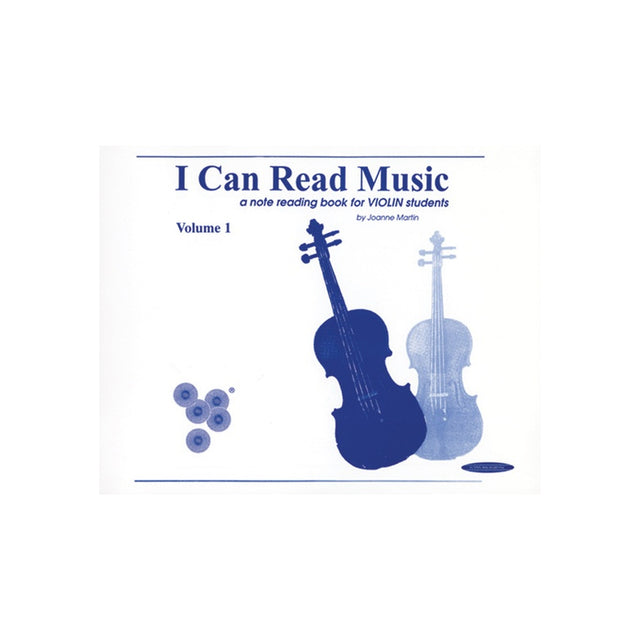
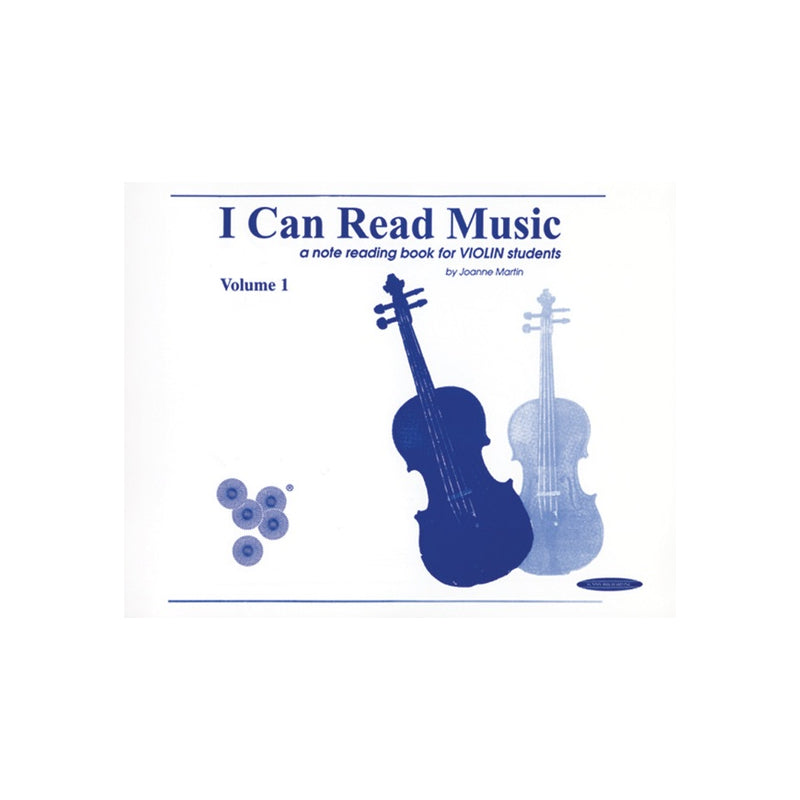


I Can Read Music Volume 1 (Violin)
I Can Read Music, Volume 1 – Violin Note Reading Book
Your child can play the violin—but can they read the music?
I Can Read Music, Volume 1 by Joanne Martin is designed to help beginning violin students make the important transition from recognizing songs and playing by ear to confidently reading notes on the page.
Especially popular as a supplement for Suzuki violin students, this progressive note-reading book introduces musical reading skills gradually and provides plenty of repetition before moving on. It's also an excellent choice for traditionally taught violin students who simply need more practice reading music.
Instead of throwing too much information at a young player at once, I Can Read Music builds reading skills one stage at a time. That makes it particularly useful for children who are becoming comfortable playing the violin but haven't yet developed the same confidence when looking at printed music.
Help Your Violin Student Become a Music Reader
Learning to play the violin and learning to read violin music are related skills—but they aren't exactly the same skill.
A young violinist may be able to play familiar pieces beautifully from memory or by ear and still hesitate when asked to play notes they've never seen before.
That's the gap I Can Read Music, Volume 1 was created to address.
Joanne Martin uses easy-to-read progressive exercises that develop note-reading ability gradually. New concepts are introduced step by step, with repeated practice at each stage so students have an opportunity to become comfortable before moving forward.
The goal isn't simply to memorize another piece.
The goal is to look at music and know what to play.
An Excellent Note-Reading Book for Suzuki Violin Students
I Can Read Music is particularly valuable for students learning through an aural approach such as the Suzuki Method®.
Young Suzuki students often develop listening, memory and playing skills from the beginning of their musical training. As music reading is introduced, a dedicated note-reading resource can give students concentrated practice developing that additional skill.
I Can Read Music, Volume 1 works alongside a student's regular violin repertoire rather than trying to replace it.
Students can continue developing beautiful tone, technique and musicality in their regular lessons while spending a little focused time strengthening their ability to recognize and play written notes.
Not Just for Suzuki Students
You don't have to be a Suzuki violin student to benefit from this book.
Alfred also recommends I Can Read Music for traditionally taught students who need additional note-reading practice.
It can be particularly useful when a teacher notices that a student:
- Plays well from memory but struggles when reading unfamiliar music
- Depends heavily on finger numbers
- Needs more confidence recognizing notes
- Guesses instead of reading
- Needs additional sight-reading practice
- Would benefit from short, focused reading exercises
- Is ready to become a more independent musician
Progressive Violin Note-Reading Exercises
One of the strengths of Joanne Martin's approach is its gradual progression.
Reading music involves recognizing several things at once. A beginning student has to interpret what is printed on the page and translate that information into the correct physical response on the violin.
Rather than introducing too much at once, I Can Read Music presents new ideas progressively and provides many repetitions at each stage.
That repetition matters.
Students aren't simply shown a concept and immediately pushed ahead. They get repeated opportunities to recognize and respond to what they're seeing, helping music reading become increasingly familiar and comfortable.
Designed for Short, Consistent Practice at Home
Music reading improves through consistency.
The exercises in I Can Read Music, Volume 1 are presented clearly enough that even quite young violin students can work through them regularly at home with a parent.
Alfred suggests that the book can be used daily at home, with the violin teacher checking the student's progress every week or two.
That makes it an excellent supplement to regular violin lessons: instead of using valuable lesson time for every repetition, the student can reinforce reading skills throughout the week and demonstrate progress at the next lesson.
A Great Resource for Violin Teachers
For teachers, I Can Read Music provides a structured answer to a very common question:
"What should I give this student for extra note-reading practice?"
Rather than creating new reading exercises every week, teachers can use Joanne Martin's progressive sequence as an ongoing part of a student's training.
It's especially useful as:
- A Suzuki violin note-reading supplement
- Beginning violin sight-reading practice
- Extra reading work between lessons
- A structured resource for students who memorize quickly
- Supplemental material for traditionally taught students
- A home-practice resource for students and parents
Great for Parents, Too
Parents don't need to be professional musicians to support their child's progress with this book.
The concepts are presented clearly enough for young students and parents to work with at home while the teacher periodically checks progress.
That makes I Can Read Music particularly useful in teaching approaches where the parent is actively involved in daily practice.
Why Note Reading Matters for Violin Students
Playing by ear is an enormously valuable musical skill. So is reading music.
As violinists progress, stronger reading skills open the door to a much larger world of music. Students encounter new repertoire, ensembles, orchestras and increasingly independent music making.
A student who can look at unfamiliar music and begin figuring it out has gained a tool that can serve them throughout their musical life.
I Can Read Music, Volume 1 helps begin building that independence early.
A Smart Companion to Suzuki Violin School
If your student is already using Suzuki Violin School, I Can Read Music serves a different purpose.
The Suzuki repertoire books provide music for developing the student's playing. I Can Read Music provides focused practice in reading notation.
Used together under the guidance of a teacher, students can continue developing their playing and listening skills while strengthening their ability to read unfamiliar music.
Who Is I Can Read Music Volume 1 For?
This book is an excellent choice for:
- Beginning violin students
- Suzuki violin students beginning note reading
- Students who learned primarily by listening or imitation
- Students who play from memory more easily than they read
- Traditional violin students needing additional reading practice
- Young violinists developing sight-reading skills
- Violin teachers looking for structured note-reading exercises
- Parents looking for productive practice between lessons
I Can Read Music Volume 1 – Violin Book Details
| Title | I Can Read Music, Volume 1 |
| Subtitle | A Note Reading Book for Violin Students |
| Author | Joanne Martin |
| Instrument | Violin |
| Type | Violin Note-Reading / Instructional Book |
| Series | Suzuki Method Supplement |
| Publisher | Alfred Music |
| Alfred Item Number | 00-0439 |
| ISBN-10 | 0-87487-439-4 |
| ISBN-13 | 978-0-87487-439-6 |
| UPC | 029156147704 |
Frequently Asked Questions
What is I Can Read Music Volume 1?
I Can Read Music, Volume 1 by Joanne Martin is a progressive note-reading book for violin students. It provides repeated exercises designed to develop music-reading ability one stage at a time.
Is I Can Read Music a Suzuki violin book?
It is published as a Suzuki Method supplementary resource and was specifically designed to help string students who have learned through an aural approach such as the Suzuki Method® develop note-reading skills.
Do I need to use the Suzuki Method to use this book?
No. I Can Read Music is also designed for traditionally taught violin students who need additional note-reading practice.
Is this a violin method book?
It is best thought of as a note-reading supplement rather than a complete violin method. Its primary purpose is focused practice developing music-reading skills.
Can a young child use I Can Read Music?
Yes. The material is presented clearly enough for quite young children to practice at home with a parent while their violin teacher periodically checks their progress.
Can students practice with this book at home?
Yes. In fact, regular home practice is one of the book's strengths. Alfred notes that students and parents can work with it daily at home, with a teacher checking progress every week or two.
Is this useful if my child can play violin but struggles to read notes?
That's exactly the kind of student this book is designed to help. It provides focused, progressive note-reading practice separate from the student's regular repertoire.
Is I Can Read Music good for sight reading?
The book's progressive exercises strengthen the note-recognition and reading skills that support better sight reading. It is especially useful for students who need more experience looking at unfamiliar notation rather than relying on memory.
Who wrote I Can Read Music?
I Can Read Music was written by Joanne Martin.
Is there an I Can Read Music Volume 2?
Yes. After developing the skills covered in Volume 1, students can continue with I Can Read Music, Volume 2 for violin.
Are there viola and cello versions?
Yes. I Can Read Music, Volume 1 is also available in separate editions specifically written for viola and cello.
From Playing the Notes to Reading the Notes
A young violinist may already know how to hold the instrument, produce a beautiful sound and play favorite pieces from memory.
The next breakthrough is being able to open a piece of unfamiliar music and begin understanding what the page is saying.
That's what I Can Read Music, Volume 1 is designed to develop.
With clear, progressive exercises and plenty of repetition, Joanne Martin gives beginning violinists a structured way to build confidence as music readers—one step at a time.
Add I Can Read Music, Volume 1 to your student's violin studies and start building stronger, more independent music-reading skills.
Delivery and Shipping
Delivery and Shipping
Add some general information about your delivery and shipping policies.
I Can Read Music Volume 1 (Violin)

Payment & Security
Payment methods
Your payment information is processed securely. We do not store credit card details nor have access to your credit card information.